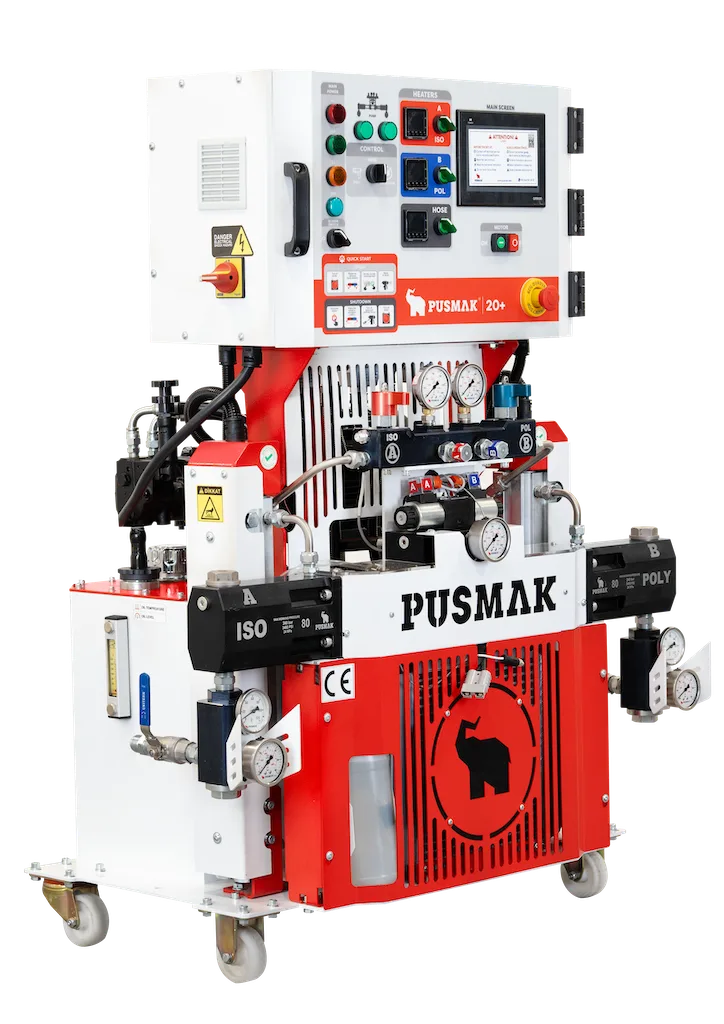
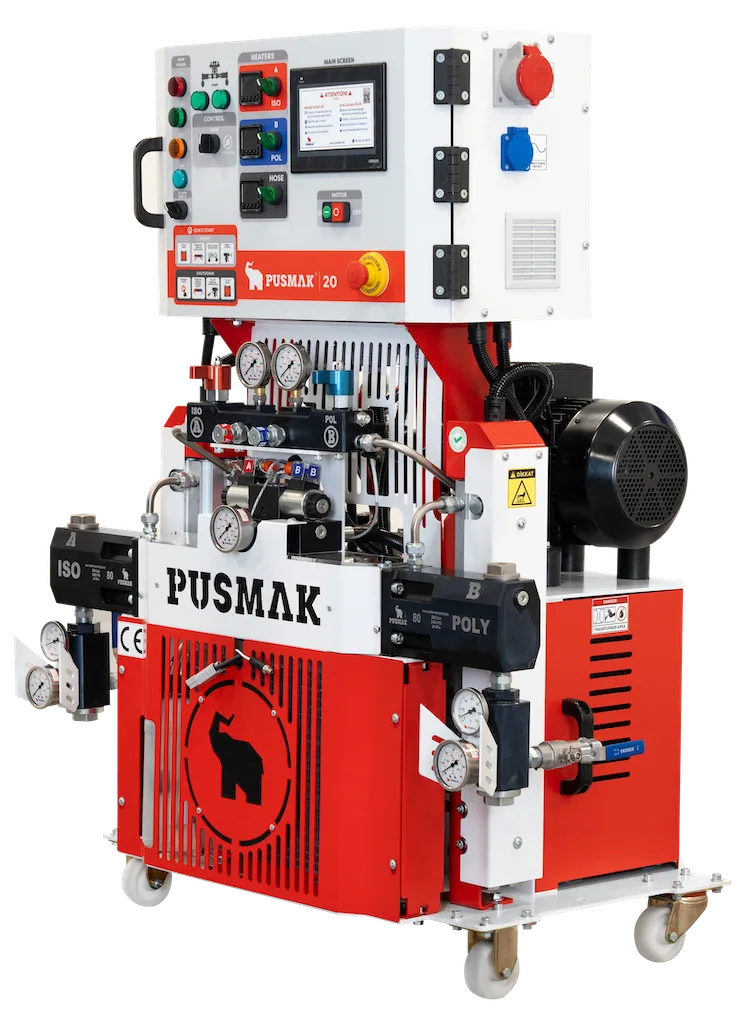
Operating a PUSMAK spray foam machine: a guide to preparing the equipment and working safely
Operating a spray foam machine takes an understanding of polyurethane materials, the components of the spray system and the safety procedures before any thermal insulation project begins. How ready the equipment is, the site conditions and whether the materials suit the machine all affect how stable the operation is and the quality of the application.
Insulation companies in Saudi Arabia use specialised spray machines for roofs, warehouses and industrial buildings, including the PUSMAK machines supplied by Trusted Line.
In this guide we cover how to get ready for operation and the performance indicators to watch, with one firm point: the actual start-up and shutdown procedures must be followed from the manual for the model you are using.
Operating a spray foam machine: the basic checks before you start
Professional guidance for applying polyurethane foam recommends assessing the site and preparing the equipment, materials and protective gear before spraying begins.
Checking the machine and the power supply
Identify the machine model and review its electrical requirements before connecting it to power.
For example, according to its published specifications the PUSMAK KPX 20 runs on 380 V three-phase power and uses a hydraulic pumping system.
A qualified person should confirm that the power supply, earthing, cables and electrical protection match the manufacturer's instructions.
Checking the hoses and fittings
Make sure there is no visible damage to the hoses, fittings or protective covers.
Signs that mean the damaged part must be taken out of use:
Material leaks.
Swelling or cracks.
Damaged fittings.
Damage to the insulation or electrical connections of heated hoses.
Heavy abrasion or abnormal kinks.
Never try to stop a high-pressure leak with your hand.
Checking the raw materials
Two-component foam systems use separate lines for each component of the material.
Before work, check the identity of the materials, their shelf life, their storage conditions and their compatibility with the spray system.
Also review the material's technical data sheet (TDS) and safety data sheet (SDS), and do not rely on settings used with a different material.
Preparing the site before spraying
Preparation is not only about the machine: the project site needs measures to protect operators and anyone nearby.
The key requirements are:
Assessing the risks associated with the site.
Isolating the spray area and keeping unauthorised people out.
Providing ventilation suited to the space and the materials.
Choosing protective and respiratory equipment according to the exposure assessment and safety data sheets.
Checking the surface temperature and moisture and the ambient conditions.
Making sure there is a means of communication and an emergency plan.
Enclosed spaces may need extra measures to control vapours and chemical mist.
Follow the material manufacturer's instructions on curing time and re-entry to the area.
How are the machine settings reviewed?
Operating settings differ between models and materials, so do not use one pressure or temperature value on every project.
A trained operator usually reviews the requirements for:
Pressure: according to the material specification and the limits of the machine, gun and hoses.
Temperature: according to the temperatures required for the components and the spray system.
Mixing ratio: according to the material formulation and the machine's metering system.
Feed: according to the material flow required from the tanks or drums.
Values and the set-up sequence are applied according to the machine manual and the material's technical data sheet, not by trial and error.
Monitoring performance while spraying polyurethane
Once a trained technician has started the machine, watch the system indicators and look out for any abnormal change.
Watching the pressure
A drop in pressure or unsteady readings can point to a problem that needs checking.
A difference between the two components' readings does not by itself mean the mixing ratio is off; diagnosis depends on the machine's design and the material's requirements.
Watching the temperature
Temperature affects the viscosity of the materials and the application conditions, so monitor the heating systems and warnings and stay within the set limits.
Watching the spray pattern
A change in how the material leaves the gun can point to a problem with the gun, the feed or the operating conditions.
When an abnormal change appears, handle it with the diagnostic and safe-shutdown procedures and do not keep spraying until the cause is known.
An example of PUSMAK equipment used for insulation
The KPX 20 is a hydraulic machine designed for spraying polyurethane foam.
Its published specifications include:
Maximum working pressure: 160 bar.
Maximum flow rate: 5.8 kg/min.
Mixing ratio: 1:1.
Preheating: 9.6 kW.
Supports hoses up to 90 m.
These values are the model's technical limits, not instructions to run the machine at full capacity.
See the PUSMAK KPX 20 spray foam machine and its technical specifications at Trusted Line.
What should you do when a warning appears during work?
Follow the instructions for your specific model, and treat any problem involving pressure, leaks, electrics or temperature as a reason to assess whether it is safe to continue.
Useful information for recording the problem:
The machine model.
The error code shown.
The stage at which the warning appeared.
The readings the system displays.
The material being used.
Internal diagnosis and repair must be carried out by a qualified technician after the approved energy-isolation and pressure-relief procedures.
Shutting the machine down after work
Shutdown procedures vary between models and may include specific instructions for the heating, the pumps, the spray gun and material left in the system.
So follow the shutdown, cleaning and storage sequence in the operating manual.
Do not disconnect pressurised parts or open the system before carrying out the machine's pressure-relief procedure.
Frequently asked questions
Can a spray foam machine be operated without training?
Operation should be handled by people trained on the equipment, the materials and the safety procedures, especially because of the risks of high pressure and chemical exposure.
Can one set of settings be used for every type of foam?
No. The material and machine specifications set the right values for each application.
Can the PUSMAK KPX 20 be used on warehouse projects?
Yes. It is intended for thermal insulation applications that match its technical capacity, taking the project conditions into account.
When should spraying be stopped?
When there is a leak, a fault that affects safety, or abnormal operating indicators that call for a shutdown according to the machine manual.
Request spray foam equipment training in Saudi Arabia
Trusted Line supplies PUSMAK machines along with training and technical support for contractors and insulation companies in the Kingdom.
If you want to train your team on the equipment, contact the company to discuss the machine model and your training needs.
Browse the PUSMAK spray foam equipment available from Trusted Line
Explore training and technical support for PUSMAK equipment
Trusted Line – Jeddah, Saudi Arabia
Phone and WhatsApp: +966 53 882 2832
Technical note: this article is for awareness and preparation only. It does not replace the machine's operating manual or approved operator training.