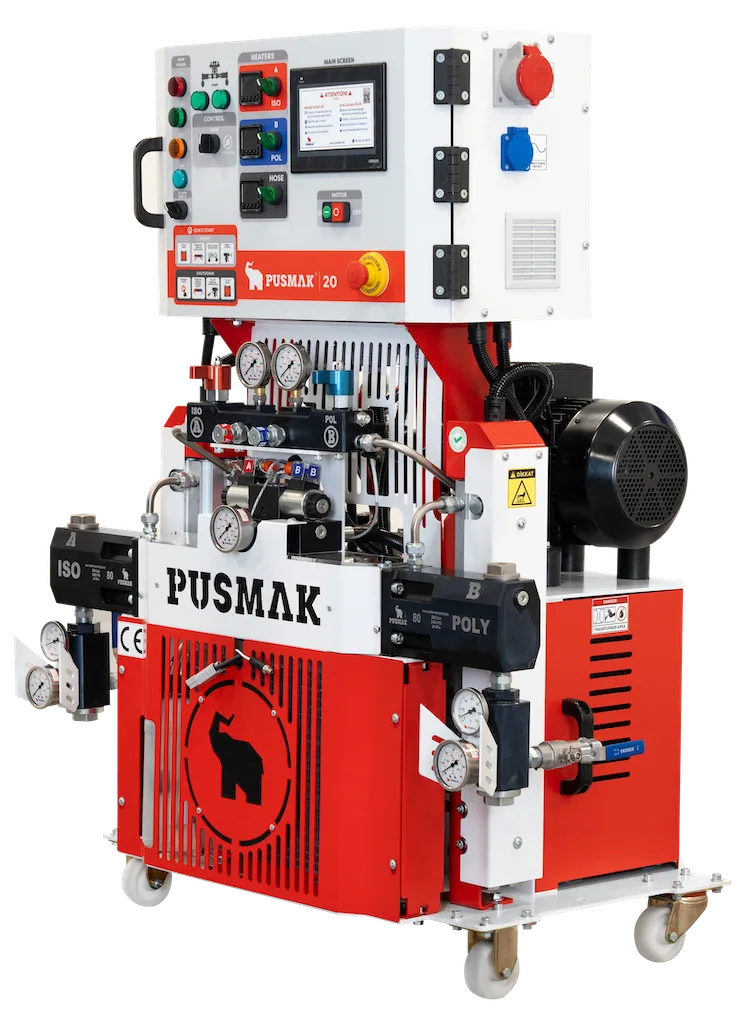
Low pressure in a polyurea machine: likely causes, and when does it need maintenance?
Low pressure in a polyurea machine can disrupt spraying or trigger warnings in the control system, which means the equipment should be assessed before waterproofing or industrial coating work continues.
Two-component polyurea equipment relies on pumping, heating and control systems matched to the material being used. Pressure changes can therefore be linked to different factors inside the machine, in the feed lines or at the gun.
In this article we look at the likely causes of pressure problems, why the warnings matter, and the diagnostic systems found on some PUSMAK machines.
What causes low pressure in a polyurea machine?
Material feed problems
An unstable feed can affect the machine's operating conditions.
One possible cause is a problem with the transfer pump or one of the material lines, but identifying the cause takes a technical inspection.
A blockage
A blockage somewhere in the spray system can affect the flow rate and the pressure readings.
Where the blockage is cannot be worked out from the symptoms alone without proper diagnosis.
A leak
Material leaking from hoses, fittings or other parts of the system is a sign to shut down safely and have the system assessed.
Never try to stop a leak with your hand: pressurised fluid can penetrate the skin.
Wear in a pumping component
The machines contain mechanical parts and seals that need checking according to the manufacturer's recommendations.
How well some of these parts work can be affected by operating conditions and wear.
Different material properties
Temperature, viscosity and the material's properties all affect resistance to flow, so make sure the application conditions match the technical data sheet.
Low pressure vs. a pressure imbalance between the two components
Low pressure means the reading has dropped below the range the application needs.
A pressure imbalance means there is a difference between the readings of the two material lines, as shown by the system's indicators.
A difference in readings does not, on its own, mean the mixing ratio is wrong. That depends on the machine's design, how it measures and the operating conditions.
So do not adjust the pressure at random to try to make the readings match.
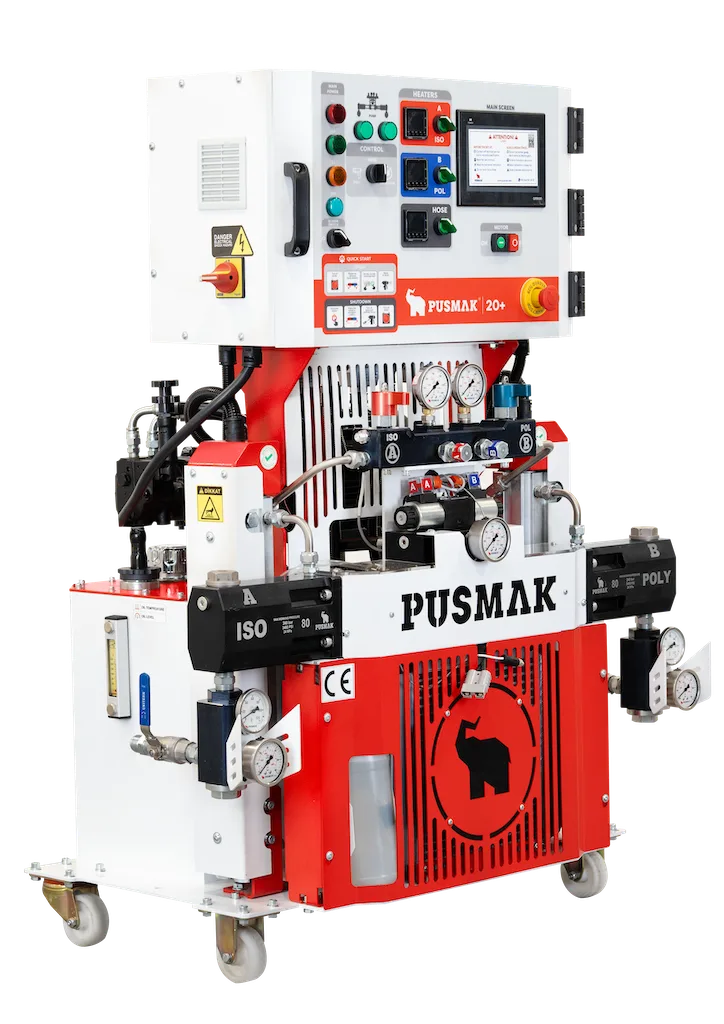
Fault diagnostics on the PUSMAK KPX 20+
The KPX 20+ is a hydraulic machine for foam and polyurea applications with a set of monitoring functions.
The published product data shows it includes:
Pressure imbalance detection.
Digital pressure readings.
A touchscreen for diagnostics.
A log to help review errors.
Control of some operating functions.
The model's published maximum working pressure is 200 bar. That is a design limit, not the right setting for every material.
See the PUSMAK KPX 20+ with fault monitoring and diagnostics.
What should the operator do when a pressure problem appears?
The operator should follow the machine's instructions and their training, and avoid anything that could increase the risk.
General good practice includes:
Paying attention to warning codes and readings.
Stopping spraying if the problem affects safety or application quality.
Following the safe shutdown procedure for the model.
Recording information that will help the technician diagnose the fault.
Not changing pressure settings beyond the approved limits.
Not taking system components apart before isolating power and relieving pressure.
Asking for a specialist inspection if the fault continues.
A blockage should never be cleared by raising the pressure or bypassing safety devices.
What information helps the service center?
When requesting service, it helps to provide:
The machine model and serial number.
The material being used.
The error code shown.
A description of what happened during the work.
The date of the last maintenance.
Details of any parts replaced recently.
Photos of the warning screen, taken without putting the operator at risk, can help explain the problem to the technician.
How can you reduce the chance of pressure problems?
Prevention starts with following the operating and maintenance requirements.
The most important practices are:
Using materials compatible with the spray system.
Reading the technical data sheets.
Sticking to preventive inspections.
Keeping hoses in good condition.
Not ignoring warnings.
Recording repeated faults.
Using suitable spare parts.
Training operators.
No preventive programme stops every fault, but it helps catch some problems early.
When does a polyurea machine need a specialist technician?
Ask for an inspection when there is:
A leak in the system.
Repeated pressure-related faults.
A fault in the pumping system.
A heating problem.
A warning you cannot explain from the equipment manual.
An abnormal stop during operation.
Repairs involving pressure, hydraulics or electrics must be carried out by a qualified technician.
Frequently asked questions
Does low pressure mean the pump is damaged?
Not necessarily. The cause may be the feed, a blockage, the condition of the materials or another part of the system.
Can I raise the machine's pressure to make up for weak spraying?
Approved settings and limits should not be exceeded. Find the cause first, following the manufacturer's instructions.
Does the KPX 20+ have a fault monitoring system?
Yes. The model's data lists pressure imbalance detection and diagnostics through a touchscreen.
Is polyurea machine maintenance available in Jeddah?
Trusted Line provides maintenance for PUSMAK equipment through its service center.
Request a polyurea machine inspection from Trusted Line
If you own a PUSMAK machine and are seeing unusual pressure changes or repeated warnings, contact Trusted Line for help working out what maintenance it needs.
Request maintenance for a PUSMAK polyurea machine
View the PUSMAK KPX 20+ specifications
Trusted Line – Jeddah, Saudi Arabia
Phone and WhatsApp: +966 53 882 2832
Technical note: this article explains possible causes and general indicators only. It is not a diagnostic or pressure-adjustment procedure approved by PUSMAK.