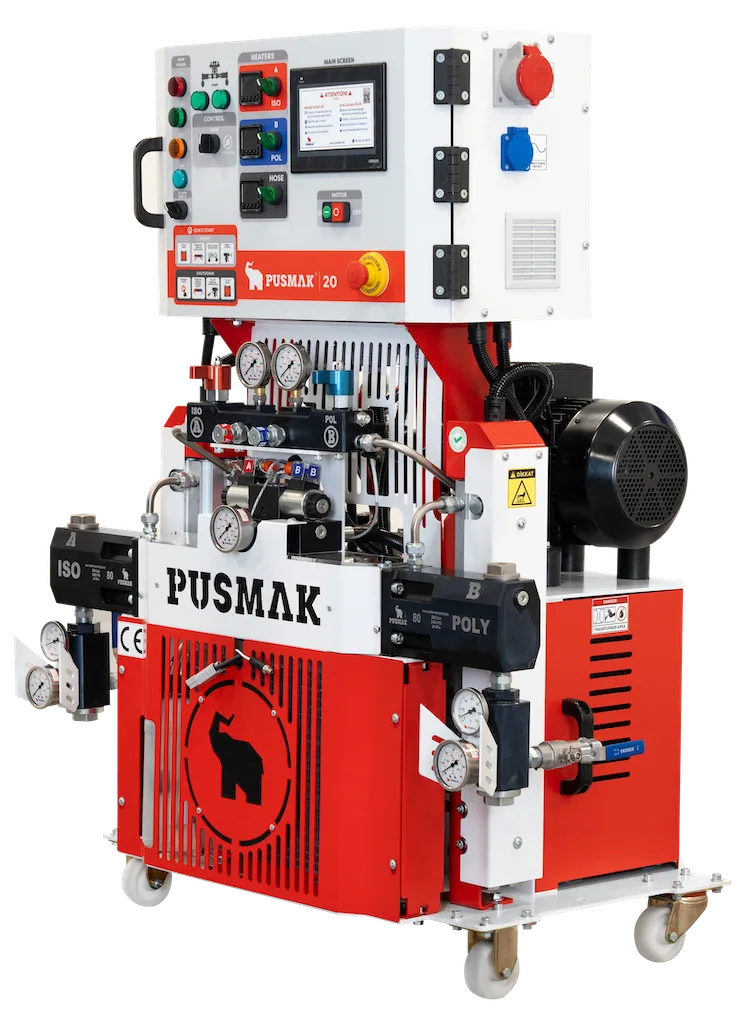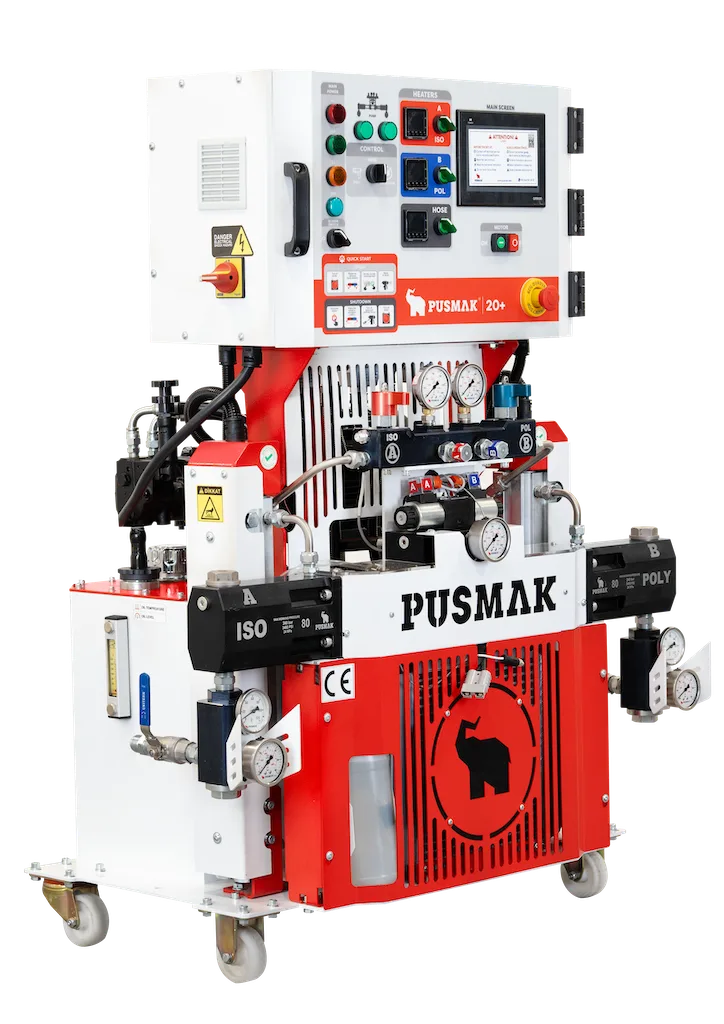
PUSMAK spray foam machine maintenance: a preventive inspection guide for contractors
Spray foam machine maintenance keeps the equipment ready for work and reduces the chance of downtime during thermal insulation and waterproofing projects. Polyurethane spray machines rely on mechanical and electrical components and on pressure and heating systems that need regular attention according to the manufacturer's instructions.
Contracting companies in Saudi Arabia face several operating challenges, including working on hot sites, moving between projects and running equipment for varying periods.
In this article we cover the main preventive checks and the signs that maintenance is needed, and how to organise equipment follow-up without relying on unapproved maintenance intervals.
Spray foam machine maintenance: which parts need checking?
Components vary by model, but professional spray systems usually include feed, pumping, heating and control units, plus the hoses and the gun.
The pumping system
The pumping system handles the materials according to the machine's design.
Signs that it may need inspecting include:
An unusual drop in performance.
Leaks.
Abnormal mechanical noises.
Repeated pressure warnings.
Irregular operation.
These symptoms are not enough to identify the faulty part, so diagnosis needs a technical inspection.
The material heating system
The heating system helps reach the temperature conditions the application requires.
Unstable readings or repeated warnings may mean the heaters, sensors and control systems need checking by a qualified technician.
Hoses and fittings
Hoses are exposed to movement, friction, heat and pressure.
They should be checked visually as part of preparing for work, and any hose showing signs of damage, leaks or a damaged heating system should be taken out of use.
The spray gun
Some gun parts may need cleaning or replacing according to the manufacturer's instructions.
Maintenance procedures differ between guns depending on the cleaning system, the mixing chamber and the sealing components.
How do you set up the right maintenance programme for the machine?
There is no single schedule that suits every PUSMAK model.
To set maintenance intervals, refer to:
The operating and maintenance manual for your model and version.
The actual operating hours.
The conditions the equipment is used in.
The type of raw materials.
The fault history.
The instructions for system components and accessories.
Distinguish between routine visual checks that a trained operator can carry out and technical maintenance that involves opening the system or dealing with electrics or pressure.
A maintenance log for contractors
An insulation company can keep an organisational log for each machine, without treating it as an official maintenance schedule.
| Information | What to record |
|---|---|
| Machine details | Model and serial number |
| Use | Operating hours |
| Faults | Description and codes shown |
| Inspection | Notes and actions taken |
| Spare parts | Part name and replacement date |
| Service | Technician's name and work report |
| Next service | According to the manufacturer's manual or the technician's recommendation |
The log helps spot repeated faults and gives the machine's history when you contact the service center.
When does the machine need specialist maintenance?
Ask for a professional inspection when any of the following happens:
Material leaking under pressure.
Electrical faults.
A problem in the hydraulic system.
Repeated heating failures.
Pressure instability that affects operation.
Repeated fault codes.
Visible damage to safety components.
Apply the proper energy-isolation and pressure-relief procedures before any technical intervention.
Can every PUSMAK model be maintained the same way?
No. Designs and functions differ between models.
For example, Trusted Line lists fault diagnostics and error-log features on models such as the KPX 20+, KPX 40 and KPX 50.
It also mentions design features on other models that make some maintenance components easier to reach.
But these features do not mean that disassembly or repair procedures are the same across machines.
Why compatible spare parts matter
When replacing any part, make sure it meets the machine's requirements.
Components that may need maintenance or replacement, depending on their condition and the manufacturer's instructions, include:
Filters.
Seals.
Some gun parts.
Sensors.
Fittings.
Damaged hoses.
Unapproved substitutes are not recommended in high-pressure systems.
PUSMAK machine maintenance services in Saudi Arabia
Trusted Line operates an authorized service center in Jeddah for the equipment it supplies.
The services offered include:
Equipment maintenance by qualified technicians.
Genuine spare parts.
Technical support.
One year of free maintenance for machines supplied by Trusted Line, excluding consumable parts, subject to the terms.
See the Trusted Line spray foam and polyurea machine maintenance service for details.
Frequently asked questions
How often does a spray foam machine need maintenance?
That depends on the model's manual, operating hours and conditions of use. A single interval cannot be set without knowing the machine.
Can the operator replace machine parts themselves?
A trained operator can carry out the work the operating manual allows. Repairs involving pressure, electrical or hydraulic systems need a qualified person.
Does Trusted Line supply PUSMAK spare parts?
Yes. The company supplies genuine spare parts and maintenance services for the equipment it supports.
What information is needed when requesting maintenance?
Have the machine model, serial number, a description of the fault, the error codes and the date of the last maintenance ready.
Request spray foam machine maintenance in Saudi Arabia
If you own a PUSMAK machine and need an inspection, maintenance or spare parts, contact Trusted Line and tell us the machine type and the problem you are facing.
Request PUSMAK machine maintenance from Trusted Line
Explore spare-parts and technical support services
Trusted Line – Jeddah, Saudi Arabia
Phone and WhatsApp: +966 53 882 2832
Note: maintenance intervals and methods are set by each model's manual and the manufacturer's procedures, not by this article.