Foam transfer pumps in Saudi Arabia: uses and a buying guide
A foam transfer pump is an important component of polyurethane and polyurea spray systems: it moves raw materials from drums or storage containers to the spray machine. Choosing the right feed system helps keep operation stable and improves efficiency on thermal insulation and waterproofing projects.
In this guide we look at the types of feed pumps and their uses, and the main technical factors to consider when buying spray equipment for contractors and insulation companies in Saudi Arabia.
What are raw material transfer pumps?
Transfer pumps are industrial equipment used to feed spray machines with chemicals from storage containers.
In two-component polyurethane spray systems, two main materials are usually moved along two separate lines:
Polyol: one of the key components in forming polyurethane foam.
Isocyanate: reacts with the other component to form the foam.
The materials travel to the proportioning machine, which controls the mixing ratio, pressure and temperature according to the application's requirements.
These pumps are different from the high-pressure equipment inside the spray machine: their main job is simply to provide a suitable, steady feed.
Why feed pumps matter on insulation projects
Roof, warehouse and industrial building insulation projects need a steady supply of raw materials, especially when the equipment runs for long periods.
The main benefits of using transfer pumps are:
A continuous feed to the spray machine.
Less manual handling of chemicals.
Easier draw-off from large drums.
Fewer stoppages caused by an unsteady feed.
Organised material lines on site.
Support for running equipment on large-area projects.
Actual performance depends on how well the pump suits the type of liquid, its viscosity and the machine's consumption rate.
The PUSMAK TP foam transfer pump and its features
Trusted Line supplies PUSMAK equipment used in industrial and thermal insulation applications, including raw material transfer pumps designed to feed spray systems.
TP series pumps run on compressed air and are used to move materials from drums to compatible equipment.
For details of the equipment and its configuration, see the PUSMAK TP transfer pump for feeding spray foam and polyurea machines at Trusted Line.
Key features
Runs on compressed air.
Can feed spray systems from drums.
A design suited to industrial use.
Helps provide a steady supply of material.
Can be integrated with compatible spray systems.
Makes it easier to set up feed lines on site.
Review the model's specifications and the manufacturer's instructions to confirm it suits the chemicals and operating conditions you need.
How do you choose the right feed pump?
Choosing transfer equipment depends on a set of technical criteria, not just price or flow rate.
1. The material being used
Know the properties of the material to be moved, including its viscosity, its sensitivity to moisture and its chemical compatibility with the pump's parts.
Some materials used in insulation systems need careful handling to prevent contamination or unwanted reactions.
2. Flow rate
Flow rate is the amount of liquid the pump can move in a given time.
It should suit the spray machine's consumption, taking actual operating conditions into account.
3. Operating pressure
Pneumatic pumps rely on a compressed-air supply, so make sure the required air pressure and flow are available according to the manufacturer's specifications.
4. Compatible hoses and fittings
Use hoses and fittings suited to the chemicals and the operating pressure, and make sure the connections are tight.
5. Maintenance and spare parts
Having the right spare parts available and carrying out regular maintenance helps reduce downtime and extend the equipment's service life.
Transfer pump vs. spray foam machine
Although both work within the same system, each has a different job.
| Item | Feed pump | Spray machine |
|---|---|---|
| Function | Moves raw materials | Prepares materials for spraying |
| Material source | Drums or tanks | The feed system |
| Controls the mixing ratio | No | Yes, depending on the machine's design |
| Heating | Not its main function | Available on systems equipped with it |
| Use | Supplies the machine with material | Applies the material to the surface |
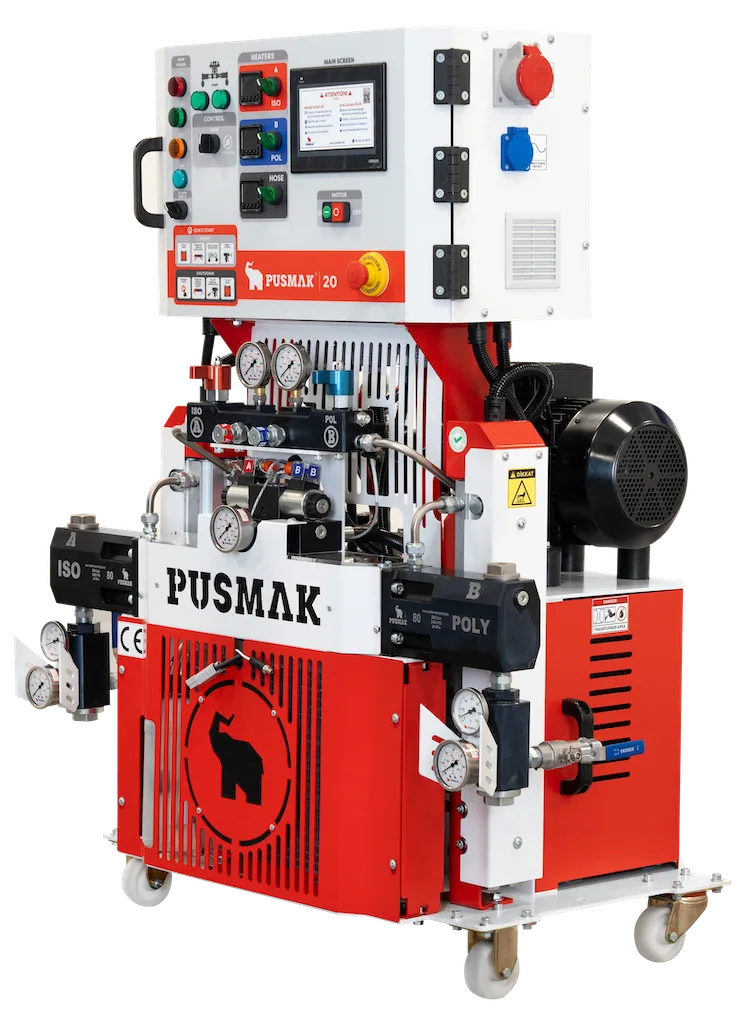
One example of equipment used for insulation work is the PUSMAK KPX 20 polyurethane spray machine, one of the spray machines designed for industrial applications.
Choosing the right feed equipment for it depends on the machine's requirements and the pumps' technical specifications.
Uses of transfer pumps in Saudi Arabia
This equipment is used as part of spray systems across a number of sectors and projects, including:
Building roof insulation
Foam systems are used for thermal insulation of roofs, and feed pumps help supply raw materials to the spray machines during the work.
Warehouse and hangar insulation
Large industrial and commercial projects need the right equipment to keep work going without interruption.
Tank and industrial facility insulation
Some polyurea systems are used for protection and insulation, and the materials and equipment chosen must be approved for the intended use.
Contracting projects
Feed equipment helps organise drawing material from storage containers when spraying on different sites.
What determines the price of transfer pumps?
Industrial equipment prices vary with several factors, including:
The manufacturer and model.
The available flow rate and pressure.
The drive type and power source.
The materials of the internal parts.
The accessories and hoses required.
Warranty and maintenance services.
The number of pumps needed for the system.
For an accurate quote, specify the type of spray machine, the chemicals used and the nature of the project.
Tips for keeping the equipment efficient
Correct use and regular maintenance help keep the feed system performing.
The most important guidelines are:
Check the connections and hoses before starting.
Use a clean air supply suited to the equipment.
Keep moisture out of moisture-sensitive materials.
Follow the manufacturer's operating and cleaning instructions.
Monitor the feed pressure during work.
Use spare parts that match the equipment's specifications.
Wear suitable protective equipment when handling chemicals.
Do not carry out maintenance before isolating power sources and relieving pressure according to the safety instructions.
Frequently asked questions
Does a spray foam machine need two pumps?
Many two-component spray systems that draw from external drums use two separate pumps, one for each material. The set-up may differ on machines with built-in tanks.
Can one pump be used for different materials?
That depends on the pump's compatibility with the chemicals and the manufacturer's instructions. Switching between materials without proper cleaning and technical checks is not recommended.
What is the difference between pneumatic and electric transfer pumps?
Pneumatic pumps run on compressed air, while electric ones rely on an electric motor. The choice depends on the application, the power source and the technical requirements.
Are material transfer pumps available in Jeddah?
Contact Trusted Line to ask about PUSMAK equipment and confirm the models, accessories and prices available.
How do I know which pump suits my spray machine?
Review the machine model, its feed requirements, the material type and the flow rate, then match this data against the pump's specifications.
Request a quote for foam transfer and spray equipment
If you work in thermal insulation or waterproofing and are looking for the right equipment for your project, Trusted Line supplies a range of PUSMAK spray machines, material transfer pumps and industrial accessories.
The sales team can help you choose the right equipment for the project and its operating requirements.
Request a quote for transfer pumps and spray equipment from Trusted Line
You can also view the PUSMAK KPX 20 for polyurethane spraying to see one of the insulation solutions available.